
News
Kenyon Supports Comair Training at Johannesburg International Airport
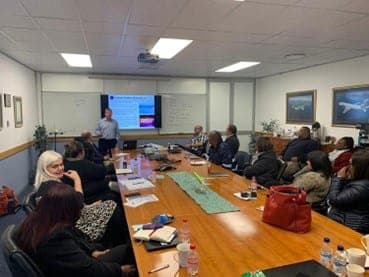
Kenyon's CEO Simon Hardern and Associate Ultan Kenny delivered a two-day crisis management training programme for South African airline Comair. The programme exercised the leadership team in responding to an accident and covered the role of an Airline Response (Go) Team, activation procedures and lessons from recent Kenyon activations. Kenyon's view is that staff not involved in crisis work daily must be specially trained.
Kenyon's operational experience of managing complex international crises has been channelled into developing a programme of consultancy training for Emergency Response and Crisis Management. Kenyon can provide training, planning, exercises and audits in most of the world’s countries/industries and in many different languages.
Why crisis roles need dedicated training
Our philosophy is simple. If your employees are not involved day-to-day in Crisis Management activities, then they need to be specially trained and prepared for these duties. Without preparation, you cannot expect your employees to be able to professionally respond and operate in a crisis situation.
Exercising Comair's leadership team and Go Team
We put this into practice this past week with a valued Client from South Africa, Comair. Kenyon’s CEO, Simon Hardern, and Associate Ultan Kenny supported a two-day programme that included exercising the leadership team in a response to an accident. Ultan also covered what an Airline Response (Go) Team should do.
What an Airline Response (Go) Team does
The ability of a company to project its command and control systems forward to the region impacted by an incident, will have a direct influence on the success of the recovery operation. The composition of Specialist Teams employed by a company will vary according to the circumstances of the incident.
Teams will likely include personnel dedicated to: investigation; communications; humanitarian support; government affairs; and also a ‘core’ team to manage multiple deployed functions.
Collectively called the ‘Go Team’, these teams constitute the reinforcement for existing local resources, the protectors of company reputation and the eyes, ears and ambassadors for the company headquarters.
This course prepared the Go Team for deployment, bolstering their confidence. Simon also covered activation procedures, as well as talking airline employees through some of Kenyon’s most recent activations which always offers an interesting oversight of reality versus a checklist response.