
Skip to content

We use cookies for analytics and to load our enquiry forms. Choose whether to allow them. Cookie Policy and Privacy Policy.

News

Maintaining and Restocking our Warehouses is the Responsibility of Every Kenyon

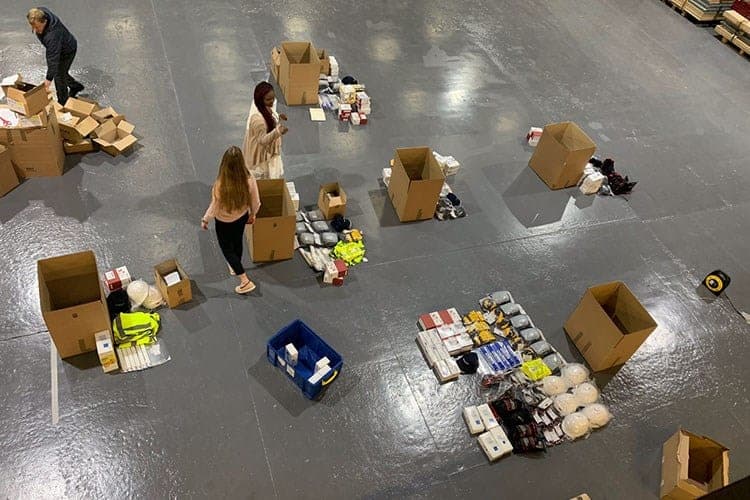
A short November 2020 update from Kenyon: after a very busy year, the team has returned to restocking equipment and personal protective equipment (PPE) so it is ready for the next deployment, including building six-person Search and Recovery kits. The title frames maintaining and restocking the warehouses as a responsibility shared by everyone at Kenyon.
1 min read
Share
Workers in white protective coveralls carrying a large collapsed inflatable structure outside a warehouse marked with the number 1 and a yellow door

After a very busy year, our team has gotten back to restocking our equipment and PPE in preparation for the next time it's needed. Here they are building 6-person Search and Recovery kits!

.   

  • When a Crisis Is Already Public: Putting Families First

    News of a major incident can travel the world in minutes, often before the organisation involved knows who is affected. Organisations can no longer assume they will tell families first that an incident has happened, but they can become a trusted source quickly while ensuring verified personal information reaches families before it is released publicly: fast about the event, careful about the facts and families-first with personal information.

  • The Capability Gaps We See Most Often: Why Compliance Is Not the Same as Competence

    A plan that is written, maintained and reviewed shows an organisation has the required arrangements in place, but not how they will perform on the day. Kenyon sets out the difference between compliance and competence, the capability gaps that surface most often in exercises, why capability erodes even when the plan does not change, and why closing an action is not the same as closing a gap.

  • Crisis Stakeholder Coordination: When No One Is in Command

    No organisation commands a major incident. Investigators, regulators, police and government each hold part of the response, while government affairs, communications, legal, operations and family assistance must decide together in real time. The article explains why those functions have to operate as one, how coordination with external authorities works, why the host community is the stakeholder that endures longest, and the three things to do before an incident.